This Malta tax guide covers the rules in force from 1 January 2026. Personal income tax runs 0–35% in widened bands; the corporate system pairs a 35% headline rate with shareholder refunds that cut the effective burden to ~5%; and resident non-doms pay tax on foreign income only if remitted — foreign capital gains stay tax-free even when brought in. There is no wealth tax, no annual property tax and no inheritance tax proper. Budget 2026 added family-friendly bands for parents and married couples, in force for basis year 2026.
Introduction
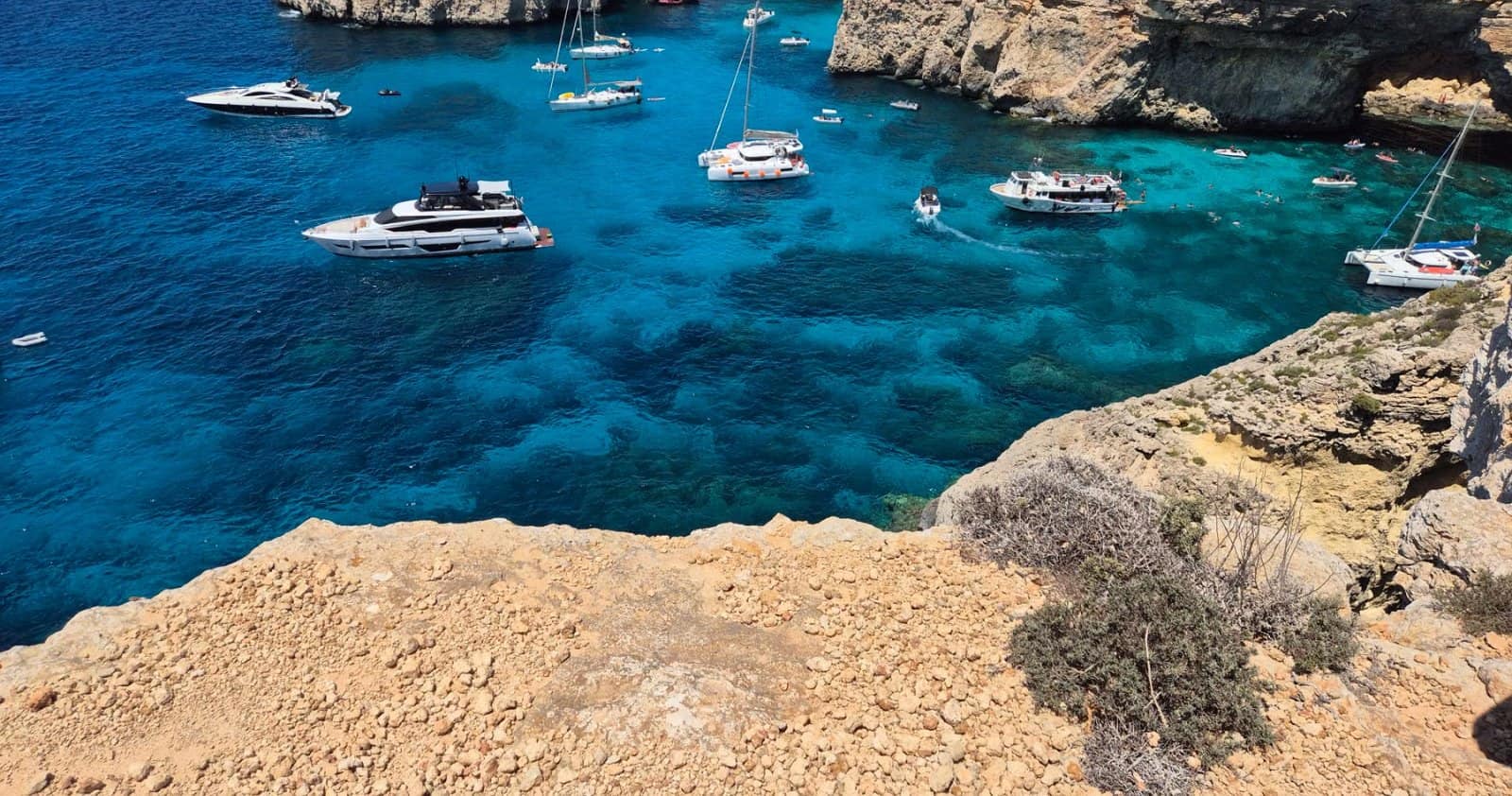
Malta is a three-island archipelago of ~560,000 people in the central Mediterranean, 90 km south of Sicily — an EU and eurozone member since 2004/2008, a Commonwealth republic, and the EU’s smallest state. English is an official language alongside Maltese, the legal system mixes continental civil law with British administrative and company-law tradition, and the workforce is bilingual by default. The climate delivers 300 days of sun; the lifestyle is dense, coastal and sociable; and the cost of living sits below western-EU norms, though Sliema-St Julian’s rents have risen with the influx of gaming, finance and tech workers.
For internationally-mobile investors, this Malta tax guide matters because Malta packages three unusual advantages inside the EU: the full-imputation and refund system that takes company profits to ~5% effective tax, the non-dom remittance basis with a flat €5,000 (~$5,700) minimum for larger foreign incomes, and an absence of wealth, annual property and estate taxes. The 2026 Budget widened the married and parent bands (in force for income year 2026), and Malta has deferred the EU minimum-tax rules for large groups while offering an elective 15% final tax from 2025.
Direct Taxes
Persons ordinarily resident and domiciled in Malta pay tax on worldwide income; residents who are non-domiciled pay on Malta-source income plus foreign income actually remitted — the remittance basis is the signature regime and the key concept for investors. Progressivity runs through four rates (0/15/25/35%) with status-based bands. A company is resident if incorporated in Malta or managed and controlled there; corporate profits bear 35%, but the full imputation system plus the 6/7 shareholder refund produces the famous ~5% effective rate on trading profits.
Personal income tax (2026 bands)
| Chargeable income (EUR) | Rate |
|---|---|
| Single rates | |
| 0 – 12,000 (~$0 – 13,700) | 0% |
| 12,001 – 16,000 (~$13,700 – 18,200) | 15% |
| 16,001 – 60,000 (~$18,200 – 68,400) | 25% |
| Over 60,000 (~$68,400) | 35% |
| Married rates — 0% band extends to €15,000 (~$17,100); with 2+ children to €22,500 (~$25,700) | 0–35% |
| Parent rates — 0% band €13,000–18,500 (~$14,800–21,100) by number of children | 0–35% |
The single/married/parent structure dates from the 2025 Budget’s band-widening; Budget 2026 added the child-differentiated married and parent tables shown above, announced as remaining in force for three years. Non-dom residents use these same rates on Malta-source and remitted income, subject to the €5,000 (~$5,700) minimum tax where unremitted foreign income is €35,000 (~$39,900) or more. Special schemes — Global Residence Programme (15% on remitted foreign income, minimum €15,000/~$17,100), Highly Qualified Persons (15% flat on qualifying salaries), Nomad Residence Permit (10% on authorised work) — sit alongside the ordinary bands.
Corporate income tax
| Item | Rate |
|---|---|
| Standard corporate income tax (headline) | 35% |
| Effective rate after 6/7 shareholder refund (trading profits) | ~5% |
| Effective rate after 5/7 refund (passive interest/royalties) | ~10% |
| Participation exemption (qualifying dividends and gains) | 0% |
| Elective final income tax without imputation (FITWI, from 2025) | 15% (confirm scope) |
| EU Minimum Tax Directive (Pillar Two) — IIR/UTPR | Deferred to 31 December 2029 |
| Withholding tax on outbound dividends, interest, royalties | 0% |
The refund mechanics: the company pays 35%, and on distribution the shareholder claims back 6/7 (trading), 5/7 (passive), or 2/3 (double-tax-relieved) of the tax — cash refunds paid by the MTCA. A participation exemption covers qualifying holdings (≥5% and other tests), a notional interest deduction trims equity-funded profits, losses carry forward indefinitely, and Malta’s ~80 tax treaties plus EU directives protect flows. Malta took the EU derogation deferring Pillar Two’s main rules until end-2029; in-scope €750m (~$855m) groups can instead elect the 15% FITWI — smaller structures keep the refund system unchanged.
Social security and health contributions
| Contribution | Employee | Employer | Self-employed |
|---|---|---|---|
| Class 1 / Class 2 (2026) | 10% | 10% | 15% |
| Weekly cap (born 1962+) | ~€55.79 (~$64) | ~€55.79 (~$64) | ~€83.69 (~$95) (confirm 2026 figures) |
Contributions are capped at the maximum insurable wage — beyond roughly €29,000 (~$33,100) of annual salary the charge flattens, so the all-in marginal cost on high salaries is close to zero. A 0.3% maternity-fund levy falls on employers. There is no separate health levy; healthcare is funded from general taxation and SSC.
Indirect Taxes
Malta applies VAT under the EU VAT Directive — the main indirect tax — administered by the Malta Tax and Customs Administration, with the standard registration and OSS machinery of any EU state.
Value-added tax (VAT)
| Rate | Applies to (examples) |
|---|---|
| 18% (standard) | Most goods and services |
| 12% (reduced, from 1 January 2024) | Yacht custody, certain health services, securities and credit management |
| 7% (reduced) | Tourist accommodation, sports facilities |
| 5% (reduced) | Electricity, confectionery, printed matter, minor repairs |
| 0% (zero) | Exports, intra-EU supplies, international transport, food and medicines |
Excise and other indirect taxes
| Tax | Notes |
|---|---|
| Excise duties | Fuel, alcohol, tobacco — EU-framework rates |
| Stamp duty — immovable property (buyer) | 5% (first-time-buyer and Gozo reliefs) |
| Stamp duty — marketable securities | 2% (5% for property companies) |
| Property transfers tax (seller) | 8% final on transfer value (residence exemptions) |
| Eco-contribution / accommodation levy | €0.50/night tourist stays |
Other Taxes Worth Knowing
| Tax | Malta treatment |
|---|---|
| Capital gains tax | No separate CGT — gains on a narrow list (unlisted shares, property, IP) taxed as income up to 35%; listed securities exempt; property under the 8% final regime |
| Capital gains — non-dom resident, foreign gains | 0%, even if remitted |
| Dividends (resident individual, Malta company) | Full imputation — 35% credit attached, no further tax for most shareholders |
| Interest (resident individual) | 15% final withholding (Malta-source); foreign interest at bands if remitted (non-doms) |
| Rental income | Optional 15% final tax on gross rent, or bands |
| Wealth / net worth tax | None |
| Inheritance / estate tax | None — but 5% duty causa mortis on Malta immovables and Malta-company shares (exemptions for residences and spouses) |
| Gift tax | None (duty applies to Malta property/share transfers) |
| Immovable property tax (annual) | None |
| Exit tax (individuals) | None (corporate exit tax per EU ATAD) |
The CGT base is genuinely narrow: quoted securities and collective funds are outside it for residents, foreign gains of non-doms are outside it entirely, and real estate runs through the flat 8% seller’s regime. A non-dom investor holding a foreign portfolio therefore pays: nothing on gains (remitted or not), tax only on remitted income, floor of €5,000 (~$5,700) a year — while living in the EU.
Disadvantages & Risks
Malta’s reputational history is the first caveat. It was the first EU member state grey-listed by the FATF (June 2021), exiting in June 2022 after a compliance overhaul; it is not currently on any FATF or EU list, but the episode, the 2017 murder of journalist Daphne Caruana Galizia and the cash-for-passports controversy (the investor-citizenship scheme was found contrary to EU law by the CJEU in 2025 and has been reworked) left lasting scrutiny. Banking friction is the practical residue — account opening is slow and conservative, and correspondent relationships remain cautious. The refund system itself draws periodic EU attention: it has survived state-aid and Code of Conduct review so far, but a structure whose selling point is 5% inside the single market carries political risk over a 10-year horizon, and the Pillar Two deferral only shields large groups until 2029.
Practical frictions follow from size: a small, dense island with congested roads, an overheated construction sector, rising rents, and an economy concentrated in gaming, financial services and tourism — the gaming sector alone is near 10% of GDP, a concentration risk if EU regulation tightens. Substance expectations have risen: refund structures without real Maltese management, staff or premises invite challenge both in Malta and from the shareholder’s home tax authority, and the remittance basis requires disciplined banking to avoid accidental remittances.
Strategy & Ideal Profile
The classic build is a two-tier structure: a Malta operating or trading company paying 35%, with a Malta (or foreign) holding company receiving the dividend plus the 6/7 refund — netting ~5% — and the participation exemption sheltering sub-holdings. Individuals layer the non-dom remittance basis on top: live in Malta, keep capital and realised gains offshore, remit only what you spend, and let the €5,000 minimum tax be the floor. Property plays use the 15% final rental tax and the 8% final sale regime; internationally-recruited executives can take the 15% Highly Qualified Persons rate on salaries above the threshold.
Who it suits: company owners with genuine operations who want a defensible ~5% inside the EU, with treaty and directive access Andorra or the Caribbean cannot offer; investors and traders as non-doms — foreign gains untaxed even when remitted is a rule almost no other EU state offers; dividend earners via imputation (no second layer of Maltese tax) and 0% outbound withholding; remote workers and retirees through the Nomad Permit (10%) and retirement/GRP programmes (15% with minimums). Ordinary tax residence follows a facts-based 183-day/centre-of-life test — EU citizens can simply move; non-EU applicants use the MPRP or employment permits.
Who it does not suit: anyone unwilling to run real substance — letterbox refund structures are the audit profile every treaty partner looks for; Malta-domiciled or returning Maltese, who cannot use the remittance basis; groups inside Pillar Two after the deferral lapses; and buyers expecting Monaco-grade polish — infrastructure, construction noise and bureaucracy are recurring expat complaints. The refund system has no legislated sunset, but its politics are live; structure with an exit path.
FAQ
Is Malta a tax haven?
No — headline rates are high (35% corporate and top personal), VAT is 18%, and Malta applies EU transparency, CRS and treaty standards. The low effective outcomes come from refund and remittance mechanics written into ordinary law. Malta is on no FATF or EU list, having exited the FATF grey list in June 2022.
What is the corporate tax rate in Malta in 2026?
35% headline. On distribution, shareholders reclaim 6/7 of the tax on trading profits (effective ~5%) or 5/7 on passive income (~10%). Large multinational groups face the EU minimum tax only from 2030 under Malta’s deferral, with an elective 15% final tax available meanwhile.
How does the Malta non-dom regime work?
Residents not domiciled in Malta pay tax on Malta-source income and on foreign income only to the extent remitted to Malta. Foreign capital gains are never taxed, remitted or not. Non-doms with €35,000+ of unremitted foreign income pay a €5,000 minimum tax. The status has no time limit, unlike the abolished UK equivalent.
What is the 183-day rule in Malta?
Spending 183 days or more in Malta in a calendar year makes you tax-resident. Residence can also arise from ordinary residence — a settled pattern of living in Malta — even below 183 days. Domicile is a separate, stickier concept based on long-term intention, and it, not residence, determines access to the remittance basis.
Does Malta tax capital gains?
Only on a defined list — unlisted shares, immovable property (via the 8% final seller’s tax), businesses and IP. Gains on listed securities and funds are exempt for residents, and foreign gains of non-domiciled residents are entirely outside the charge, even when remitted.
Is there inheritance or wealth tax in Malta?
There is no inheritance or estate tax and no wealth tax. On death, a 5% transfer duty applies only to Malta-situated immovable property and shares in Maltese companies, with exemptions including the family home passing to a surviving spouse. Foreign assets pass free of Maltese charges.
How are dividends taxed for a non-dom investor in Malta?
Maltese dividends carry a full imputation credit for the 35% company tax, so most individuals owe nothing further. Foreign dividends are taxable only if remitted to Malta — kept offshore they are untaxed (subject to the €5,000 minimum), and Malta levies no withholding on dividends flowing out.
Sources
All figures should be checked against the primary government sources below.
- Malta Tax and Customs Administration (MTCA) — 2026 personal tax bands, corporate tax, VAT — mtca.gov.mt
- MTCA — remittance-basis guidance for non-domiciled residents — mtca.gov.mt (remittance guidance)
- Department of Social Security / MTCA — Class 1 and Class 2 SSC rates — mtca.gov.mt
- Residency Malta Agency — MPRP, Nomad Residence Permit — residencymalta.gov.mt
- FATF — Malta listing history (grey-listed June 2021, delisted June 2022) — fatf-gafi.org
- European Central Bank — EUR/USD reference rate used for conversions — ecb.europa.eu
USD figures are indicative conversions at ~1 EUR = 1.14 USD (ECB reference rate, early July 2026) and rounded.
Last verified: 5 July 2026.
This is general information, not personal tax or legal advice. Tax outcomes depend on your specific facts; consult a qualified Malta tax adviser before acting.
Related guides: Andorra · Argentina · Australia · Bahamas · Botswana · Brunei · Bulgaria · Ceuta and Melilla · Chile · China · Costa Rica · Cyprus · Denmark · Dominican Republic · El Salvador · Estonia · Florida · Georgia · Gibraltar · Greece · Hawaii · Hong Kong · Iceland · Indonesia · Isle of Man · Italy · Jersey · Kuwait · Latvia · Macau · Mauritius · Monaco · Montenegro · Morocco · New Zealand · Panama · Paraguay · Philippines · Portugal · Puerto Rico · Romania · Sark · Seychelles · Singapore · South Korea · Taiwan · Thailand · Ticino · UAE · Uruguay · Zug