This Sark tax guide covers the rules in force from 1 January 2026. Sark has no income tax, capital gains tax, inheritance tax or VAT. Residents pay an annual Personal Capital Tax of 0.51% of worldwide net assets, with a £630 (~$830) minimum and a £12,619 (~$16,700) maximum that can be paid without declaring assets, plus a property tax charged per “quarter” of land and buildings. Open-market homes carry a 7.5% transfer tax. Chief Pleas is tightening reliefs for 2027 and planning a wider reform for 2028.
Introduction
Sark is the smallest self-governing jurisdiction in the Bailiwick of Guernsey, a British Crown Dependency in the Bay of St Malo — an island about 3.5 miles (5.5 km) long, 7 miles east of Guernsey and 20 miles off France, with around 500 residents and no cars. It belongs to neither the UK nor the EU; the UK Government handles its international relations. Laws are made by Chief Pleas, an assembly of 18 elected and unpaid Conseillers, and the Court of the Seneschal applies a legal system rooted in Norman customary law. English is the everyday language and the climate is mild, close to Devon or Brittany. Life is simple but not cheap — no mains water, electricity at a regulated 54p (~$0.71) per kWh, and a single year-round ferry link to Guernsey.
For internationally mobile wealth, this Sark tax guide matters because the island taxes assets rather than income — and caps the bill. A resident worth £50m (~$66m) pays the same personal tax as one worth £2.5m (~$3.3m): the Personal Capital Tax (PCT) tops out at £12,619 (~$16,700) in 2026, payable without disclosing any assets. Salaries, profits, dividends, interest and gains go untaxed, and nothing is due at death. The trade-offs are no social security or public healthcare, no tax treaties and scarce housing. From 1 January 2026 property tax rose about 10% and the PCT floor and ceiling about 15%, and a broader PCT overhaul is being prepared for the 2028 tax year.
Direct Taxes
Sark taxes no income from any source, so the worldwide-versus-territorial question never arises. Direct tax rests on two levies under the Direct Taxes (Sark) Law, 2002, administered by the Sark Tax Assessor: a Property Tax on the “quarters” of land and buildings recorded in the Cadastre, paid by the property’s possessor, and a Personal Capital Tax due from every resident who spent 90 or more nights on Sark in the preceding year. PCT is a flat 0.51% of worldwide net assets (excluding the Sark home and pensions) between a fixed minimum and maximum, so there is no progressivity. Residents choose the cheapest option available to them, and the forfait — a multiple of the property tax on one’s home that replaces any asset declaration — is the key concept for investors. There is no corporate tax and no corporate residence test.
Personal income tax and Personal Capital Tax (2026 rates)
| Personal tax option (2026) | Annual charge (GBP, USD) |
|---|---|
| Income tax (employment, business and investment income) | None |
| PCT — asset declaration | 0.51% of worldwide net assets |
| PCT — minimum tax | £630 (~$830) |
| PCT — maximum tax (no asset disclosure) | £12,619 (~$16,700) |
| Forfait (possessor of a principal residence) | 3.30 × property tax on that home — £64.02 (~$85) per quarter |
| Household member of a forfait payer (“Box 2”) | Minimum tax — £630 (~$830) |
| Possessor under 69 with net assets ≤ £125,000 (~$165,000) | Exempt |
| Aged 69+ or medically unfit to work, net assets ≤ £150,000 (~$198,000) | Exempt |
These figures come from the Direct Taxes for 2026 (Sark) Ordinance, 2025, in force from 1 January 2026; in 2025 the minimum was £549 (~$725) and the maximum £10,973 (~$14,500). The cap equals 0.51% of about £2.47m (~$3.27m), so wealthier residents pay the maximum either way, while £1m (~$1.32m) of declared assets costs £5,100 (~$6,740). A 40-quarter home on the forfait costs £2,561 (~$3,385) of PCT plus £776 (~$1,025) of property tax. Declarations are due by 28 February; paying in full by 28 January earns a 2.5% discount, and quarterly or monthly instalments are allowed. For 2027, Chief Pleas is being asked to limit Box 2 to one member per household and to set a minimum forfait of 30 quarters — about £1,921 (~$2,540) at 2026 rates.
Corporate income tax
| Item | Rate |
|---|---|
| Sark corporate income tax | None |
| Property tax on commercial and tourist buildings (2026, per quarter) | £22.00 (~$29) |
| Guernsey company income tax, if a Guernsey company is used — standard / intermediate / higher | 0% / 10% / 20% |
| Guernsey Pillar Two top-up taxes (groups with revenue ≥ €750m (~$853m), from 1 January 2025) | 15% minimum |
A Sark business — a guest house, a fishing boat, a consultancy run from a cottage — pays nothing on its profits in Sark; its tax cost is property tax on its premises plus the owner’s PCT. Sark has no companies registry of its own (confirm with a Bailiwick adviser), so incorporated businesses use Guernsey or foreign companies, taxed where they are resident: Guernsey applies 0% as standard, 10% to regulated financial services and 20% to utilities, large retailers and Guernsey property income, with Pillar Two top-up taxes only for groups above the €750m (~$853m) threshold. Sark levies no withholding taxes, and Guernsey’s tax treaties expressly do not extend to it.
Social security and health contributions
| Contribution | Employee | Employer | Self-employed |
|---|---|---|---|
| Social insurance (pension, sickness, unemployment) | None | None | None |
| Health insurance and long-term care | None | None | None |
| Payroll tax | None | None | None |
Guernsey’s social insurance, health and long-term care schemes cover Guernsey, Alderney, Herm and Jethou — not Sark. Sark has no state pension, no maternity, child or unemployment benefit, and no NHS access: residents are urged to hold private medical insurance, since treatment and emergency evacuation to Guernsey are paid for by the patient. The Procureur offers needs-based financial help, but it is not guaranteed.
Indirect Taxes
Sark has no VAT, GST or sales tax and sits outside both the UK and EU VAT areas. Indirect revenue comes from the impôt — a duty on imported alcohol, tobacco and certain fuels that Chief Pleas sets independently of Guernsey — plus property transfer tax, a landing tax and small licence fees.
Value-added tax (VAT)
| Rate | Applies to (examples) |
|---|---|
| None (0%) | All goods and services supplied in Sark — no VAT, GST or sales tax |
| Not applicable | UK and EU VAT — Sark is outside both VAT areas |
Prices are still high: nearly everything arrives by ferry via Guernsey, and goods from outside the Bailiwick’s customs union with the UK, Jersey and the Isle of Man can attract import duty.
Excise and other indirect taxes
| Tax | Notes |
|---|---|
| Impôt (excise duties) | Duty on imported alcohol, tobacco and certain fuels; Sark sets its own rates, separate from Guernsey’s (confirm the current schedule with the Sark Treasury) |
| Property Transfer Tax | 7.5% of the adjusted value on transfers of ownership or long leases; 4% for local-market dwellings (approved by Chief Pleas in July 2026 — confirm commencement) |
| Landing tax | £1.52 (~$2) per passenger from 1 January 2026, up from £1.47 (~$1.95), built into ferry fares |
| Refuse charge | £88.80 (~$117) per person per year |
| Licences | Annual tax on bicycles; dog and horse licences; motor vehicles need an import permit |
For newcomers the 7.5% rate is the relevant one: local-market dwellings (built since 1976) may only be occupied by locally qualified people — born on Sark, resident for 15 years, or their family — so incomers buy or rent open-market homes. On a £1m (~$1.32m) purchase the tax is £75,000 (~$99,000). Chief Pleas has also warned that selling a property-owning company instead of the property itself will not escape taxation (announced 2024 — confirm current legislation).
Other Taxes Worth Knowing
| Tax | Sark treatment |
|---|---|
| Capital gains tax | None |
| Dividends (resident individual) | None — foreign withholding still applies at source |
| Interest (resident individual) | None |
| Rental income | None on the income; the let building pays property tax — £19.40 (~$25.60) per quarter for dwellings, £22.00 (~$29) for tourist lets |
| Wealth / net worth tax | Personal Capital Tax — 0.51% of worldwide net assets, capped at £12,619 (~$16,700) |
| Inheritance / estate tax | None |
| Gift tax | None (a gift of Sark real property may still fall within Property Transfer Tax — confirm) |
| Immovable property tax (annual) | £19.40 (~$25.60) per quarter for dwellings and domestic outbuildings (2025: £17.60 (~$23)); £22.00 (~$29) commercial and tourist; open land nil |
Sark’s tax base is narrow by design. In 2025 direct taxes raised about £1.2m (~$1.59m), split almost evenly between property tax and PCT: 154 residents paid the forfait, 169 the minimum, only 34 declared their assets and one paid the maximum. A resident investor’s whole annual bill is property tax plus a PCT between £630 (~$830) and £12,619 (~$16,700), whatever their income, dividends or gains. Landlords should note a bill approved in July 2026 that makes owners jointly liable for property tax their tenants fail to pay.
Disadvantages & Risks
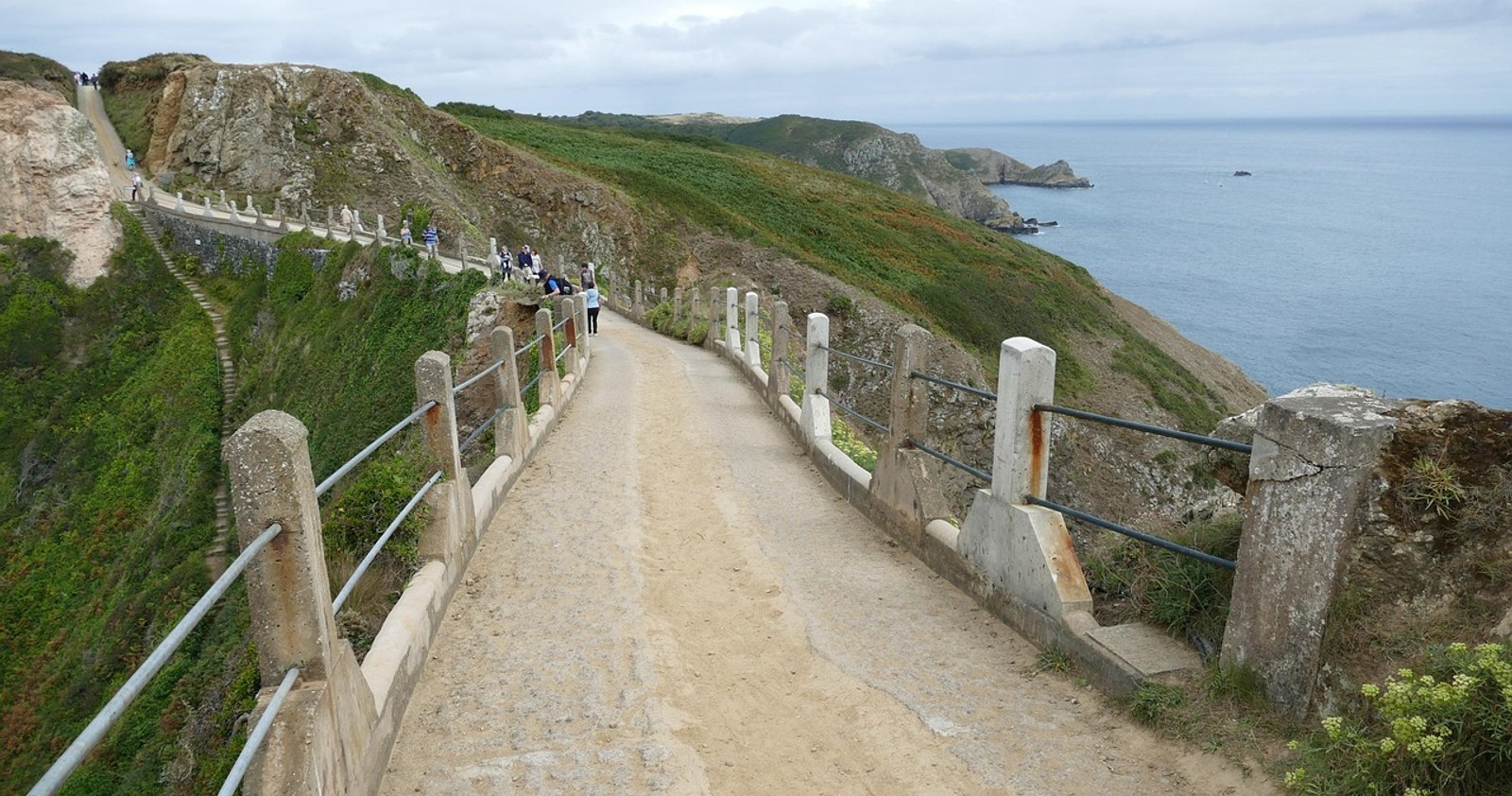
Sark’s core weakness is scale. A micro-economy of around 500 people, reliant on tourism, funds a 2026 budget of £2.5m (~$3.3m), and Chief Pleas’ September 2026 update lists unavoidable bills — La Coupée, a sewage works estimated at £1m–£1.4m (~$1.32m–$1.85m), an incinerator, harbour repairs and eventually a new ferry — against cash reserves of £1.1m (~$1.45m). Tax reform risk is therefore real: the 2028 package may move PCT to wealth bands and raise the no-disclosure maximum, though officials say an opt-out will remain at a competitive level. Infrastructure is thin (no airport, no cars, no mains water, weather-dependent ferries, no ATM), there is no social security or public healthcare, and only UK citizens or people permitted to live in the UK may settle.
Guernsey’s double tax and information-exchange agreements do not apply to Sark, so foreign withholding taxes bite in full and there is no treaty tie-breaker if a former home country still claims you as resident. The island also carries baggage from the 1990s “Sark Lark”, when residents served as nominee directors for offshore companies. Today financial activity on Sark is regulated by the Guernsey Financial Services Commission; the Bailiwick’s February 2025 MONEYVAL evaluation placed it in regular follow-up, compliant or largely compliant on all 40 FATF recommendations, and it is not on the EU list of non-cooperative tax jurisdictions (February 2026 update). Banks may still apply extra scrutiny to a Sark address.
Strategy & Ideal Profile
The strategy is simple because there is little to structure. Become resident by spending 90 or more nights a year on the island, hold investments directly, and pay property tax plus the cheapest PCT option — declaration below about £2.47m (~$3.27m) of net assets, the £12,619 (~$16,700) maximum above it, or the forfait on a modest home at £64.02 (~$85) per quarter. Dividends, interest, gains and business profits are then untaxed in Sark. Trading businesses can use a Guernsey company at the 0% standard rate or a foreign entity managed so that it is not tax-resident elsewhere. There is no minimum investment or residence-by-investment scheme; the real entry costs are the 7.5% transfer tax on an open-market home and a tiny housing stock.
Investors and traders gain most: a portfolio of any size costs at most £12,619 (~$16,700) a year, with no disclosure. Company owners and dividend earners pay nothing in Sark on distributions from companies abroad. Retirees benefit because pensions are excluded from PCT, and those aged 69 or over with net assets up to £150,000 (~$198,000) pay none. British citizens leaving a high-tax home without leaving the British Isles are the natural audience, though UK leavers must still satisfy the UK statutory residence test. In practice, the 90-night test looks back at the preceding year, so a newcomer’s first PCT bill follows their first qualifying year.
Sark does not suit anyone who needs a treaty network or a corporate base with recognised international substance, families with teenagers (the island school stops at 13), people with significant health needs, or non-UK nationals without UK residence rights. Nor is today’s cap permanent: Box 2 and the forfait are being tightened for 2027, with a broader reform aimed at 2028.
FAQ
Is Sark a tax haven?
Sark has no income tax, capital gains tax, inheritance tax or VAT, which fits most definitions of a tax haven for individuals. It is not tax-free, though: residents pay property tax and a Personal Capital Tax of up to £12,619 (~$16,700) a year, and open-market property transfers attract 7.5%. The Bailiwick of Guernsey is not on the EU tax blacklist and was placed in MONEYVAL’s regular follow-up in 2025.
What is the corporate tax rate in Sark in 2026?
Zero — Sark has no corporate income tax. Businesses pay property tax on their premises, £22.00 (~$29) per quarter for commercial and tourist buildings in 2026. A company incorporated in Guernsey is taxed there, normally at 0%, or at 10% or 20% for specified activities.
How does the Sark Personal Capital Tax and forfait work?
Each resident chooses an option on the annual declaration: declare worldwide net assets (excluding the Sark home and pensions) and pay 0.51%, within a £630 (~$830) minimum and £12,619 (~$16,700) maximum; pay the maximum without declaring; or, as possessor of a principal residence, pay the forfait — 3.30 times the property tax on that home. Low-asset residents can be exempt.
What is Sark’s 90-night rule?
Personal Capital Tax is payable by anyone who spent 90 or more nights on Sark in the preceding year. There is no minimum investment, but you must be a UK citizen or permitted to live in the UK. A possessor living outside Sark whose Sark property was not available to them for 90 nights or more is exempt from PCT but still pays property tax.
Does Sark tax capital gains?
No. Gains on shares, crypto-assets, businesses and property are not taxed in Sark. The only transaction tax is Property Transfer Tax on Sark real estate — 7.5% for open-market property. A former country of residence may still tax gains under its own exit or temporary non-residence rules.
Is there inheritance or wealth tax in Sark?
There is no inheritance, estate or gift tax. The Personal Capital Tax works as a capped wealth tax: 0.51% of worldwide net assets, with a 2026 maximum of £12,619 (~$16,700), reached at roughly £2.47m (~$3.27m) of net assets.
How are dividends taxed for a Sark resident investor?
Sark does not tax dividends at all. Because Guernsey’s double tax agreements do not extend to Sark, however, dividends from abroad bear the paying country’s full domestic withholding tax, with no treaty reduction.
Sources
All figures should be checked against the primary government sources below.
- Chief Pleas of Sark — Living on Sark: taxes, Property Transfer Tax, housing, immigration, healthcare and social security — sarkgov.co.uk
- Chief Pleas of Sark — The Direct Taxes for 2026 (Sark) Ordinance, 2025 and the Financial Provisions (Variation of Rates) (Sark) (No. 2) Ordinance, 2025 (2026 rates, landing tax) — sarkgov.co.uk (PDF)
- Chief Pleas of Sark — Tax Reform (January 2026 information sheet with 2023–2025 tax data; September 2026 reform update for 2027 and 2028) — sarkgov.co.uk
- Guernsey Legal Resources — Direct Taxes for 2025 (Sark) Ordinance (2025 property tax rates) — guernseylegalresources.gg
- Guernsey Legal Resources — Real Property (Transfer Tax, Charging and Related Provisions) (Sark) Law, 2007 — guernseylegalresources.gg
- States of Guernsey — Social Security contributions (scheme covers Guernsey, Alderney, Herm and Jethou) — gov.gg
- States of Guernsey — Tax compliance and international agreements (not applicable to Sark) — gov.gg
- States of Guernsey — Customs and excise duties (Sark sets its own excise rates) — gov.gg
- States of Guernsey — Revenue Service: company tax rates; Pillar Two — gov.gg (companies) and gov.gg (Pillar Two)
- States of Guernsey — Bailiwick MONEYVAL evaluation — gov.gg
- Bank of England — daily spot exchange rates against sterling (USD conversions) — bankofengland.co.uk
USD figures are indicative conversions at ~1 GBP = 1.32 USD (Bank of England spot rate, 24 September 2026) and rounded. Sark uses the Guernsey pound, which circulates at par with sterling.
Last verified: 26 September 2026.
This is general information, not personal tax or legal advice. Tax outcomes depend on your specific facts; consult a qualified Sark or Guernsey tax adviser before acting.
Related guides: Andorra · Argentina · Australia · Bahamas · Botswana · Brunei · Bulgaria · Ceuta and Melilla · Chile · China · Costa Rica · Cyprus · Denmark · Dominican Republic · El Salvador · Estonia · Florida · Georgia · Gibraltar · Greece · Hawaii · Hong Kong · Iceland · Indonesia · Isle of Man · Italy · Jersey · Kuwait · Latvia · Macau · Malta · Mauritius · Monaco · Montenegro · Morocco · New Zealand · Panama · Paraguay · Philippines · Portugal · Puerto Rico · Romania · Seychelles · Singapore · South Korea · Taiwan · Thailand · Ticino · UAE · Uruguay · Zug